In this June 10, 1964 file photo, Martin Luther King, Jr. gives a young picket a pat on the back as a group of youngsters started to picket St. Augustine, Florida. (AP Photo, FILE)
Martin Luther King Jr. faced racism and violence when he traveled to St. Augustine, but that visit precipitated the signing of the Civil Rights Act of 1964.
In the 1960s, as St. Augustine was preparing for its 400th anniversary honoring its Spanish past, America’s oldest city was steeped in racial strife.
Not only were Blacks excluded from the festivities in the city that Martin Luther King Jr. called the most segregated in America, but civil rights activists in St. Augustine were beaten and arrested as their homes were shot up and firebombed. Ku Klux Klan members attacked peaceful protesters, and the state of Florida led the country with the highest number of lynchings per capita in the first half of the twentieth century.
Change was needed in St. Augustine, but also nationwide. That’s why when King visited the Ancient City to join forces with the St. Augustine Movement, he also used that opportunity to call more attention to the importance of passing the Civil Rights Act.
King told Southern Christian Leadership Conference (SCLC) members that “St. Augustine, Florida, was a place that could help determine the future of race relations for the whole state of Florida at that time in the 1960s. It was sort of a pivotal area,” Dr. Benjamin Chavis, former leader of the NAACP and current president of the National Newspaper Publishers Association, told the St. Augustine Record. Chavis started working with King as a youth coordinator for the SCLC when he was 14.
While in St. Augustine, the reverend had meetings with local civil rights leaders and stirred crowds at churches. But, unsurprisingly, he also faced resistance and racism. He had to move from house to house for his safety—one house was even shot at, burned, and vandalized—and he was arrested along with other activists for asking to be served at a local motel restaurant.
Photographs documenting the hate and persecution that King and civil rights leaders faced during the visit made an impact nationwide, shining a light on the struggles and injustices faced by the Black community everyday.
Just three weeks after King’s visit to St. Augustine, on July 2, President Lyndon B. Johnson signed the Civil Rights Act of 1964 into law prohibiting discrimination on the basis of race, color, religion, sex or national origin.
If you go to St. Augustine today, you can still visit some of the sites that took center stage during his visit.
5480 Atlantic View Cottage
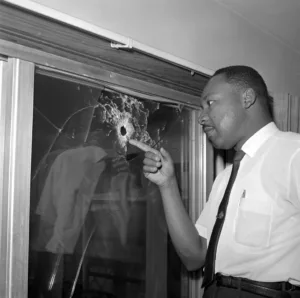
(AP Photo/Jim Kerlin, File)
For his safety, King stayed at multiple locations. This cottage in St. Augustine Beach was the winter home of missionaries who opened their house to King and other members of the SCLC. Word got out that King was planning to stay here, and before he arrived, the cottage was shot at, burned, and vandalized in separate attacks.
Monson Motor Lodge
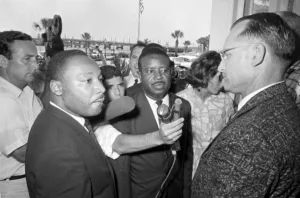
(AP Photo)
On June 11, 1964, King and his entourage, including Rev. Ralph Abernathy, went to the Monson Motor Lodge and asked to be served in the restaurant. The manager refused and told them to leave. When they didn’t leave, King and 17 others in his group were arrested for trespassing.
A week later King and his group planned a swim-in where Black and white protesters jumped in the lodge pool. The manager of the motel poured muriatic acid into the pool to get them out. News and photographs of this incident made headlines nationwide.
In 2003, the Monson Motor Lodge was demolished. The Bayfront Hilton, which now stands in its place, preserved the steps where King was arrested.
St. Johns County Jail
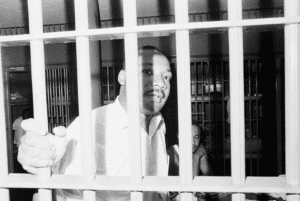
(Bettmann /Getty Images)
After King and other civil rights activists were arrested at the Monson Motor Lodge, they were brought here. A photo of King’s fingerprints from the St. Johns County Sheriff’s Office has been on display in the Florida House chambers since 2011.
81 Bridge St.
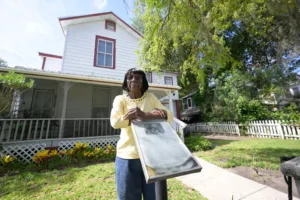
(Phelan M. Ebenhack for The Washington Post via Getty Images)
Cora Tyson, one of St. Augustine’s grande dames of civil rights, hosted King and other activists several times during the 1960s. The ACCORD Civil Rights Museum is across the street.
St. Paul AME Church
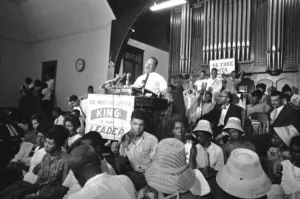
(AP Photo)
This is one of the churches where King spoke during this visit. Hundreds of people attended his church rallies and marched to the Plaza de la Constitución in downtown St. Augustine to demand civil rights.
RELATED: 5 Afro Latinas to Celebrate During Black History Month and Beyond
Author
Support Our Cause
Thank you for taking the time to read our work. Before you go, we hope you'll consider supporting our values-driven journalism, which has always strived to make clear what's really at stake for Floridians and our future.
Since day one, our goal here at Floricua has always been to empower people across the state with fact-based news and information. We believe that when people are armed with knowledge about what's happening in their local, state, and federal governments—including who is working on their behalf and who is actively trying to block efforts aimed at improving the daily lives of Florida families—they will be inspired to become civically engaged.

No Results Found
The page you requested could not be found. Try refining your search, or use the navigation above to locate the post.

Florida’s wildfire season: What you need to know
Discover Florida's year-round wildfire risks, contributing factors, and prevention strategies, plus key historical events and community awareness....
Decline of Florida’s citrus industry hastened by Trump’s tariff tiff
Hurricanes and disease have already taken a tremendous toll on those fragrant trees, not to mention development demand for the land. This weekend I...