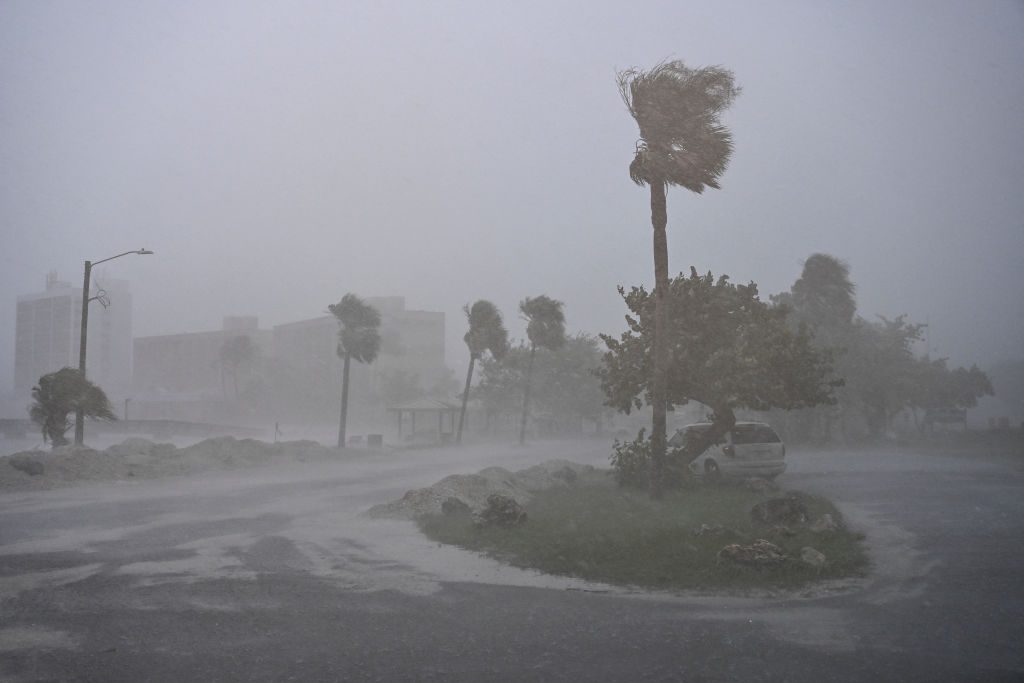
Photo by Chandan Khanna/AFP via Getty Images
The Republican governor likened global warming to debunked theories spread across social media that claim the government can send hurricanes to targeted locations.
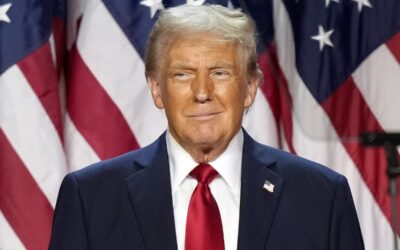
Just hours after Hurricane Milton swept through Central Florida, Gov. Ron DeSantis on Thursday dismissed suggestions that global warming can increase the intensity of hurricanes.
The Republican governor – who has removed “global warming” and “climate change” references from Florida law – likened it to debunked theories spread across social media that claim the government can control the weather, sending hurricanes to targeted locations.
“This is on both sides. You kind of have some people think the government can do this, and others think it’s all because of fossil fuels. The reality is what we see, there’s precedent for all this in history. It is hurricane season, you are going to have tropical weather,” DeSantis said at a Thursday press conference.
“There’s nothing new under the sun,” DeSantis added. “These are natural occurrences.”
A recent study from researchers World Weather Attribution, however, revealed that Hurricane Helene – the Category 4 hurricane that devastated the Sunshine State last month – dumped more rain than a similar storm would have in a cooler climate.
Florida already impacted
Even those who don’t support the idea that climate change can cause hurricanes largely agree that the warming climate could lead to stronger hurricane effects, such as higher storm surge, more extreme rainfall, and more rapid intensification.
In fact, global warming has already impacted Florida permanently and irreversibly, according to the United Nations’ Intergovernmental Panel on Climate Change (IPCC).
Released in 2022, the report from the world’s top scientists uses Florida as an example of a place where the impacts of climatic variations are already being felt, both environmentally and economically.
For its part, the Florida Climate Institute warns that failing to cut greenhouse gas emissions within a decade will cause catastrophic damage, including the collapse of traditional weather conditions. In Florida, that means flooding would get worse, heat would continue to rise, and hurricanes would continue to intensify, among other issues.
RELATED: DeSantis Receives a D- Grade from Environmental Group for ‘Refusal to Address Climate Crisis’
Despite this, climate change continues to be a lesser priority in Florida and largely disappeared from state statutes under legislation signed in May by DeSantis.
The legislation, which took effect July 1, stripped the term “climate change” from much of state law and moved the state’s energy goals away from the reduction of greenhouse gasses blamed for climate change to instead promoting the expansion of natural gas, reducing regulation on gas pipelines in the state, and increasing protections against bans on gas appliances, such as stoves.
It also eliminates requirements that government agencies make fuel efficiency the top priority in buying new vehicles and ends a requirement that Florida state agencies look to climate-friendly products before making purchases.
A clear and present danger
Pepper Uchino, president of the Florida Beach and Shore Preservation Association, disagrees with DeSantis’ assessment. Climate change, he says, is a clear and present danger.
“It’s not hyperbole to say that there is no other state that has more to lose over this issue than the state of Florida,” said Uchino.
Floridians generally agree. According to a report from Dream Corps Green for All, in partnership with UnidosUS Action Fund, Latinos are concerned for their physical safety as sea levels continue to rise and hurricanes grow stronger and more dangerous because of warmer waters.
DeSantis received strong criticism online after during a press briefing on Oct. 7, White House press secretary Karine Jean-Pierre confirmed that President Joe Biden and Vice President Kamala Harris’ calls about hurricane relief efforts went unanswered by DeSantis. DeSantis’ office said they rejected the calls because they “seemed political.”
In response, Vice President Kamala Harris called DeSantis’ stance “utterly irresponsible.”
RELATED: One day before Hurricane Helene, these Florida Congress members voted against funding FEMA
Author

Support Our Cause
Thank you for taking the time to read our work. Before you go, we hope you'll consider supporting our values-driven journalism, which has always strived to make clear what's really at stake for Floridians and our future.
Since day one, our goal here at Floricua has always been to empower people across the state with fact-based news and information. We believe that when people are armed with knowledge about what's happening in their local, state, and federal governments—including who is working on their behalf and who is actively trying to block efforts aimed at improving the daily lives of Florida families—they will be inspired to become civically engaged.


How Sarasota’s Season of Sharing supports families after back-to-back storms
Season of Sharing, a Sarasota-based program that pays essential expenses for households in crises, has spent over $710,000 helping more than 400...

Florida’s iconic Key deer face an uncertain future as seas rise
BIG PINE KEY, Fla. (AP) — The world's only Key deer, the smallest subspecies of the white-tailed deer, are found in piney and marshy wetlands...
Florida’s wildfire season: What you need to know
Discover Florida's year-round wildfire risks, contributing factors, and prevention strategies, plus key historical events and community awareness....

Decline of Florida’s citrus industry hastened by Trump’s tariff tiff
Hurricanes and disease have already taken a tremendous toll on those fragrant trees, not to mention development demand for the land. This weekend I...