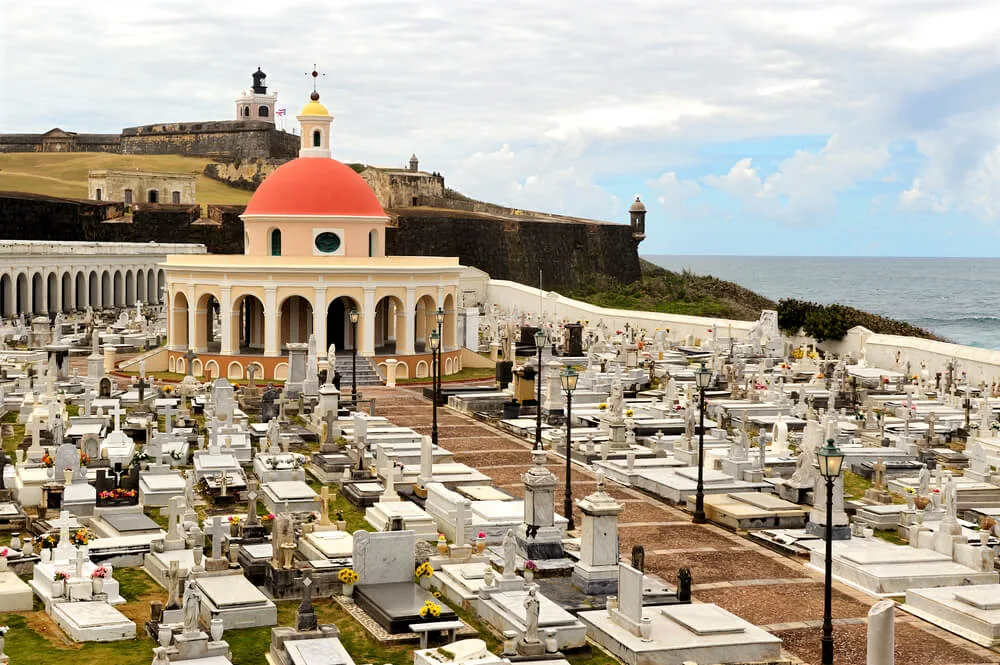
The risk of dying last year was 24% higher compared to eight years ago. (Image via Shutterstock).
Puerto Rico’s higher death rate was in part due to a COVID spike early last year that killed more than 2,300 people, according to official data.
Puerto Rico experienced more than 35,400 deaths in 2022, which is almost 3,300 more than expected yearly, based on historic patterns.
According to a study commissioned by Puerto Rico’s Health Department, analyzed by The Washington Post and Puerto Rico’s Center for Investigative Journalism (CPI), that number of deaths surpassed even Hurricane Maria’s toll, which was 2,975.
RELATED: El Otro Puerto Rico Emerges to Tackle the Housing Crisis and Displacement on the Island
Scientists describe that unusually high death count as “excess mortality,” resulting from natural disasters, disease outbreaks, and other factors.
Puerto Rico’s higher death rate was in part due to a COVID spike early last year that killed more than 2,300 people, according to official data.
The risk of dying last year was 24% higher compared to eight years ago.
In addition to COVID, other factors that increased the death rate include an exodus of medical professionals, poor health services, and the emigration of young Puerto Ricans, leaving behind a large population of older people facing health complications.
The analysis found that last year’s spike was concentrated among people over 65 years of age, with other age groups dying at more typical rates.
The passage of Hurricane Fiona also had an impact on people over 75 years of age, when more deaths were reported between September and November of last year.
“These types of events, both hurricanes and earthquakes, as well as pandemics, have made evident the vulnerability of many older adults who live alone, many of whom live below the poverty line, who do not have the most basic resources to face that type of adversity,” José Carrión-Baralt, a professor in the gerontology program at the Recinto de Ciencias Médicas Graduate School of Public Health in San Juan told The Post.
The study also revealed that the metropolitan region of San Juan was the one with the highest mortality rate, with 13.5 deaths per 1,000 inhabitants.
RELATED: US Union to Congress: ‘Time to tax the millionaires in Puerto Rico’
The main causes of deaths were heart diseases (18.3%), malignant tumors (15.2%), diabetes mellitus (8.7%), Alzheimer’s disease (8.4%), and COVID-19 (5.7%)
Puerto Rico’s alarming death rate, 110 people per 10,000 residents, is 11% higher than that of the US. According to the study, even the wealthiest Puerto Ricans experienced death rates last year similar to those suffered by poorer communities.
Author

Support Our Cause
Thank you for taking the time to read our work. Before you go, we hope you'll consider supporting our values-driven journalism, which has always strived to make clear what's really at stake for Floridians and our future.
Since day one, our goal here at Floricua has always been to empower people across the state with fact-based news and information. We believe that when people are armed with knowledge about what's happening in their local, state, and federal governments—including who is working on their behalf and who is actively trying to block efforts aimed at improving the daily lives of Florida families—they will be inspired to become civically engaged.


Oppose ICE? Here’s how you can take action
The moment we’re in The US Senate is currently deciding whether to approve new funding for the Department of Homeland Security (DHS), including...
Florida’s wildfire season: What you need to know
Discover Florida's year-round wildfire risks, contributing factors, and prevention strategies, plus key historical events and community awareness....
Florida’s wildfire season: What you need to know
Discover Florida's year-round wildfire risks, contributing factors, and prevention strategies, plus key historical events and community awareness....
Decline of Florida’s citrus industry hastened by Trump’s tariff tiff
Hurricanes and disease have already taken a tremendous toll on those fragrant trees, not to mention development demand for the land. This weekend I...